
News
Siemens to deliver Romania’s first hydrogen-powered train fleet
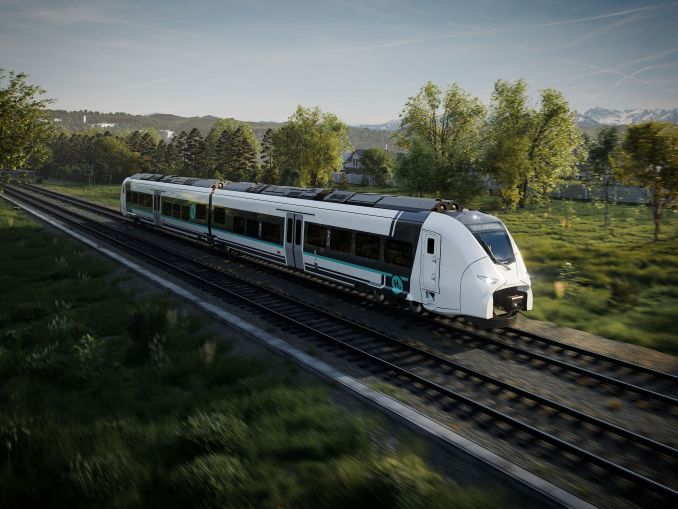
Siemens Mobility has been awarded a contract by Romania’s Railway Reform Authority (ARF) for the delivery of 12 two-car H2-powered electric multiple units based on the Mireo Plus H platform, marking the first H2 train contract in Romania and one of the first H2 projects in Eastern Europe. The project represents a significant step towards the decarbonization of regional rail transport and the modernization of passenger services across the country. The agreement includes the delivery of the trains as well as full maintenance and repair services for an initial term of 15 years. The trains are due in passenger service in 2029.
“We are proud to deliver the first fleet of H2 trains for Romania. With the Mireo Plus H, we combine a proven regional train platform with state‑of‑the‑art H2 technology, enabling zero‑emission rail operations on non‑electrified lines. H2 will play a key role in achieving climate‑neutral mobility in Europe, and this project clearly demonstrates how innovation can be translated into reliable and economically attractive rail solutions,” said Andre Rodenbeck, CEO Rolling Stock at Siemens Mobility.
H2 propulsion and energy efficiency. The Mireo Plus H features a H2 fuel cell-based electric propulsion system, complemented by battery energy storage. The batteries are charged either via the fuel cell system or through regenerative braking, enabling highly efficient energy use and zero local emissions during operation. Siemens Mobility has optimized the vehicle concept to significantly reduce weight, component complexity, energy consumption, and maintenance costs. All key onboard components have already been validated in previous Siemens Mobility projects, ensuring a high level of technical maturity and operational reliability.
Mireo Plus H – a modern regional train for Romania. The trains for Romania are based on the Siemens Mireo platform and configured as articulated two-unit trainsets with a maximum operating speed of 120 km/h. Each trainset offers 131 fixed seats plus 5 folding seats, providing a high level of passenger comfort while ensuring operational efficiency. The trains can be operated in multiple traction of up to two coupled units, offering flexibility for both current and future operational requirements.
Safety systems and passenger information. The vehicles will be equipped with PZB (intermittent train control) train protection systems and European Train Control System, ensuring compliance with European safety and interoperability standards. A modern Passenger Information System will provide continuous travel information through interior and exterior displays as well as automated announcements, enhancing the travel experience for passengers and supporting operational staff.
Comprehensive service scope and local presence. In addition to vehicle delivery, the contract includes a comprehensive full-service maintenance package with a duration of 15 years, extendable by another 15 years. Maintenance activities will be carried out locally in Romania, including at a dedicated depot in Bucharest, by Siemens Mobility personnel, supported by Railigent X digital maintenance and fleet management systems designed to optimize availability and extend component and battery lifetimes.
The scope delivers a fully integrated, end-to-end service solution, combining preventive and corrective maintenance, comprehensive overhauls, full Entity in Charge of Maintenance responsibility, and seamless material supply, ensuring optimal train availability and consistently smooth, reliable operations.
By replacing diesel-powered rolling stock, the new H2 trains will contribute to a significant reduction of emissions and noise in regional rail transport, supporting Romania’s long-term sustainability and climate objectives. The Mireo Plus H and the Mireo Plus B are part of Siemens Mobility’s successful Mireo platform, which comprises 24 fleets and nearly 600 trains. They stand for modern technology, high energy efficiency with savings of up to 25%, and the advantages of a standardized vehicle platform that enables synergies and economic benefits.
From The Archives
Connect with H2Tech
