
Articles
Control valve selection for blue hydrogen production
Hydrogen (H2) demand is quickly increasing because the gas plays a growing role in the world’s energy decarbonization strategy. H2 provides a clean energy source for industrial processes, is finding use in the transportation sector and can be used for long-term storage of electrical energy.
Unfortunately, elemental H2 is quite rare, so it must be produced via industrial processes. Most of the H2 produced today is used in the refining and chemical markets and is created by a process called steam methane reforming (SMR). As green energy and sustainability initiatives come into operation, H2 production must expand dramatically; however, that H2 must be produced with a low-carbon footprint. While wind and solar projects can produce zero-carbon green H2, their ramp rate and ultimate production will fall far short of demand. As a result, the bulk of H2 production must be created from blue H2 facilities.
This article explains how a blue H2 plant works, with a focus on the critical control valves that ensure maximum efficiency, reliability and production for these processes.
Blue H2 production. Nearly all industrial H2 production processes reform steam and natural gas into H2 and carbon dioxide (CO2) using pressure, heat and catalysts. The most common technology is SMR, which has been utilized for decades to satisfy the H2 demand of refineries and ammonia plants. Recent advances have created more efficient H2 production pathways such as autothermal reforming (ATR). While the technology is quite promising, very few ATR sites are in production, so this article will focus on the SMR blue H2 process (FIG. 1).
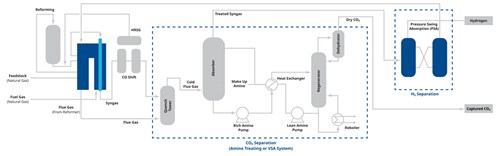
FIG. 1. SMR combines methane (natural gas) and steam (produced by a heat recovery steam generator) at very high temperatures to create H2, CO2 and carbon monoxide (CO) (syngas). Shift converters convert CO to CO2, which is removed in the amine section. Produced H2 is purified in the pressure swing adsorber (PSA) unit downstream.
The primary difference between a typical SMR process and a blue H2 process is the outlet of the CO2 separation unit. Instead of simply venting CO2 to atmosphere, blue H2 plants further process the recovered CO2 and use it for other processes or send it to pipelines for sequestration. This allows H2 production with a much-reduced carbon footprint, but it adds to the operating costs, forcing a blue H2 facility to run at peak efficiency to keep H2 prices as low as possible.
Critical reformer valves. The key process parameters for the reformer are control of the steam-to-carbon ratio of the process feeds and tight furnace temperature control (FIG. 2). The reaction in the reformer process reaction is shown in Eq. 1:
CH4 + H2O → CO + 3H2 (1)
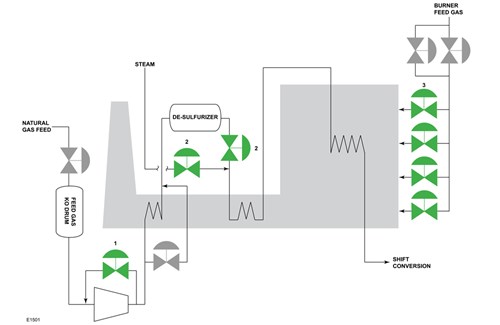
FIG. 2. While there are many key valves within the reformer, the most critical valves include anti-surge control on the feed gas compressor (1), steam-to-carbon ratio control (2) and feed gas to the burners (3).
The ratio of steam-to-natural gas must be carefully maintained since this directly affects conversion efficiency and avoids catastrophic catalyst damage caused by coking. Coking occurs when there is not enough steam to react with the carbon atoms, which can plug up the catalyst and piping with carbon soot.
Key valves for the reformer process include the feed compressor anti-surge valve, which protects the compressor from catastrophic surge conditions should the downstream valve unexpectedly close. This valve must have Class V shutoff, then open extremely quickly and accurately to maintain compressor flow and avoid surge. While operating, the valve will take the full compressor pressure drop, so it will require low noise and high-hardness trim, along with specialty actuator boosters and high diagnostic positioners to enable fast and accurate response. This valve must be carefully engineered to meet the specific requirements of the compressor.
Steam and feed gas flow valves are critical for steam-to-carbon ratio control. They must also provide very tight shutoff and handle high process temperatures, while providing precise flow control. Depending on flow conditions, these valves may require low noise trims, as well.
Feed gas valves must maintain stable and accurate process temperatures and provide tight shutoff when a burner is not in service. Leaking valves can inhibit pre-fire leak test sequences.
All these valves will require Class IV or V shutoff and high-quality digital positioners with embedded diagnostics (FIG. 3). With high pressures and temperatures common in the process, fugitive emissions are an issue that must be addressed with very low leakage provided by live loaded packing, which may require a combination of graphite, polytetrafluoroethyelene and other materials to provide low friction and emissions.
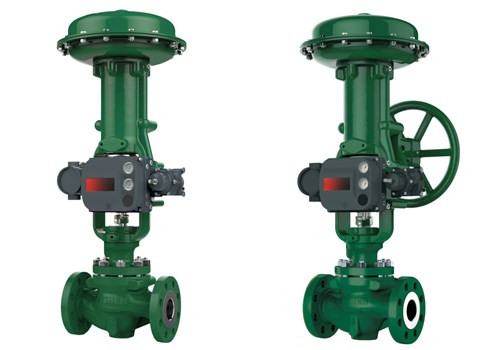
FIG. 3. Critical reformer valvesa will typically require Class V shutoff, metal-to-metal seats, high-performance digital positioners and high-temperature, low-emissions environmental packing. Some applications will require noise abatement trims.
Key shift converter valves. Shift converters contain catalysts that react CO and water (H2O) into CO2 and H2. Excess process heat is used to generate high-pressure steam, which is fed back to the reformer as a process feed (FIG. 4). Critical valves in this process (4 and 5 in FIG. 4) control boiler feed flow to the steam generator exchangers located between the high- and low-temperature shift vessels. By varying the position of each of these valves, shift converter temperatures can be properly maintained, avoiding catalyst damage and inefficient operation due to poor conversion and lost H2 production.
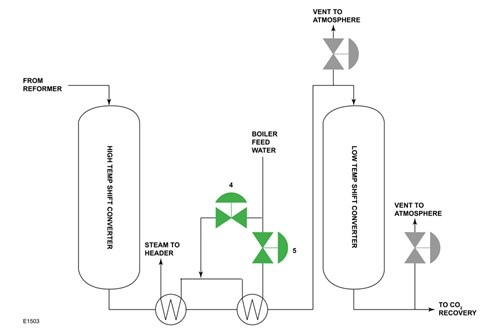
FIG. 4. Shift converters react CO and H2O into CO2 and H2. The low-temperature shift converter temperature valves (4 and 5) maintain process temperatures and generate high-pressure steam to feed the reformer.
The boiler feedwater valves must be high-pressure valves with hardened trim. Depending on the pressure drop and the amount of upstream preheating, anti-cavitation trim may be required. Class II shutoff is usually adequate for this application (FIG. 5).
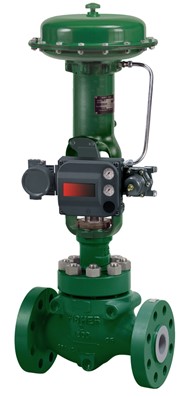
FIG. 5. Key valves around the shift converters will be high-pressure valves with hardened trim to control both steam production and shift converter temperatures. Cavitation can be a problem depending on incoming feed temperatures, so the valves must be designed with this in mind.
CO2 recovery. The syngas leaving the shift converters will consist mostly of CO2 and H2, with trace residual gases. All process gas enters the amine absorber, where circulated amine liquid absorbs the CO2. H2 leaves the top of the absorber to be further purified in a PSA, while the CO2-laden amine is heated and depressurized in the amine regenerator to separate the CO2 from the liquid. The CO2 is then sent downstream for further processing, while the lean amine is cooled and returned to the amine absorber to process more syngas.
Control valves in this process area encounter off-gassing, cavitation and corrosion, so this is a punishing application. This topic is too extensive to cover in this article, but other resources are available that delve into this topic further.
PSA. H2 leaving the CO2 recovery system is relatively pure but still contains trace quantities of other gases, which must be removed. This is accomplished by passing the gas through a collection of PSA beds (FIG. 6), each of which selectively adsorb and remove all gases except H2.
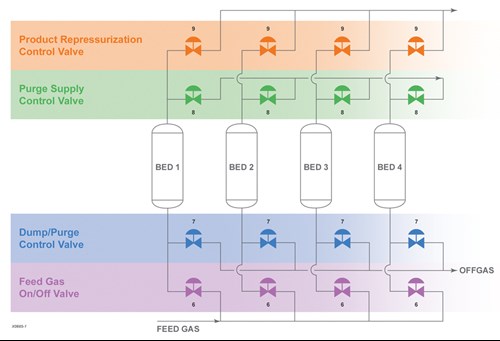
FIG. 6. PSA beds adsorb trace residual gases and allow pure H2 to pass through. Beds saturate quickly and then must be blocked in, purged with low-pressure pure H2 and repressurized with the outlet valve before being placed back into service.
The beds saturate quickly, so they must be continuously removed from service and regenerated. In normal service, the feed gas valve (6) and the product repressure valve (9) are open, allowing gas to pass through. When a bed requires regeneration, valves 6 and 9 close, and the dump valve (7) opens to gradually reduce the bed pressure and allow the contaminants to be released. The resulting offgas is usually burned in the reformer as fuel gas.
The purge valve (8) opens, as needed, to remove any remaining contaminants from the bed, using pure H2 from one of the other beds. Once the contaminants are removed, valves 7 and 8 close, and the product repressure valve 9 is gradually opened to repressurize the bed with pure H2 before placing it back into service.
Depending on bed design, PSA valves can be cycling nearly continuously, and they face several difficult challenges. The feed and product valves must stroke quickly, and all the valves must achieve very high shutoff despite the possible presence of erosive media dust and reverse pressure. Any valve leakage results in lost or contaminated product.
PSA valves will typically be a high-performance butterfly or globe valve with Class VI shutoff (FIG. 7). Inlet and outlet valves will usually require stroke times of 2 sec or less. High performance butterfly valves should have an eccentric, chrome-plated disc to minimize erosion and extend service life.
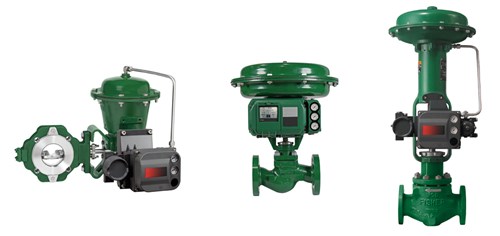
FIG. 7. PSA valvesb must endure high cycle counts yet still achieve bi-directional Class VI shutoff. Hardened trims, specialized stem treatments and high diagnostic positioners are generally used for this application.
Globe valves in this service will require hardened trim, as well as additional valve stem treatment and specialized packing to handle the high cycle rates. All actuators and valve designs must be tested for 1 MM cycles or more. High diagnostic positioners with non-contact feedback can monitor cycle counts and alert operations to developing issues—such as high friction, packing leakage or valve travel problems—in advance of failure.
Takeaways. When faced with specifying valves for a blue H2 process, users should consult with their automation partner to determine the best valves for their particular application. Decisions in materials of construction, valve body selection, packing design and trim arrangement can have a dramatic impact on the performance and long-term reliability of each valve, and this will directly affect the facility’s profitability and safety.
The array of options can be overwhelming, but with a solid understanding of the process and some help from a knowledgeable provider, it is possible to select the best control valve solutions to maximize efficiency and performance.
NOTES
a Fisher™ easy-e™ control valves
b Shown left to right: Fisher™ 8580 high-performance butterfly valve, Fisher™ GX control valve and actuator system, and the Fisher™ easy-e ED control valve
Connect with H2Tech
