
Articles
How power plants can shift from natural gas to green H2: A practical pathway for the next decade
Electricity systems are entering a period of rapid transformation: wind and solar continue to expand; storage technologies are advancing; and governments are tightening their long-term decarbonization commitments.
Yet, even with this strong momentum, power grids still rely on dispatchable thermal generation to maintain stability during periods of low renewable generation. Combined-cycle gas turbines (CCGTs) have delivered this reliability for decades. Their dependence on natural gas, however, leaves them incompatible with net-zero targets.
Green hydrogen (H2) provides a viable route to decarbonize thermal power without retiring essential gas turbine infrastructure (FIG. 1). When produced via electrolysis using renewable electricity, H2 can be stored at scale and used as a low-carbon fuel in adapted turbines. This effectively transforms turbines into long-duration, renewable-backed storage assets.
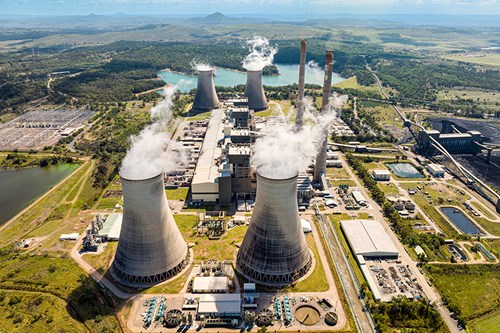
FIG. 1. Demonstration projects across Europe and North America have shown that H2-to-power is technically achievable.
Transitioning from natural gas to H2 is not straightforward. H2 behaves differently in combustion systems, affects materials and safety engineering, and requires new infrastructure. Demonstration projects across Europe and North America have shown that H2-to-power is technically achievable. They also highlight the practical considerations that operators must address as this technology scales.
This article synthesizes the engineering, operational and economic insights that will shape H2 deployment in thermal power through 2035.
Why H2 matters for the future of thermal power. Most long-term energy outlooks project a dominant role for wind and solar generation.1 However, they also show a growing need for firm, flexible assets that can respond to multi-hour and multi-day variations in renewable output. Batteries provide short-duration balancing but become expensive at longer durations. H2 fills this gap.
Extending the life of existing gas infrastructure. H2 enables the decarbonization of gas turbines without the economic and operational disruption of early retirement. Modern CCGTs can be adapted for high-H2 blends and, eventually, full H2 firing.2
Complementing renewables with long-duration storage. H2 can be produced when renewable electricity is abundant and stored for later use. This offers seasonal and multi-day resilience that batteries or pumped hydro alone cannot deliver.3
Supporting system-wide decarbonization. H2 is a cross-sector fuel. It can serve power generation, heavy industry and transport. Using H2 in turbines, therefore, supports a broader energy transition strategy.4
Demonstrations such as HYFLEXPOWER in France and the Intermountain Power Project in Utah (U.S.) already show that H2-fired turbines can operate reliably at scale.3,5
How H2 changes turbine combustion. H2 is not a simple substitute for methane (CH4). Its molecular properties require new approaches in turbine design and operation.
Combustion characteristics that reshape burners. H2 has a higher heating value per kilogram than CH4 yet a lower volumetric energy density—approximately 120 MJ/kg for H2 vs. 50 MJ/kg for CH4. Delivering equivalent thermal input requires approximately triple the volumetric flow compared with natural gas.6 This affects:
- Fuel piping diameter
- Pressure drops
- Premixer and valve sizing.
H2 also has a flame speed up to eight times that of CH4.7 This increases the risk of flashback, particularly in dry low-nitrogen oxides (NOx) (DLN) premixed combustors.
NOx formation: Zero-carbon does not mean zero emissions. H2 combustion emits no carbon dioxide (CO₂), but it does create thermal NOx due to high flame temperatures.7 Without mitigation, NOx emissions can exceed those of CH4. Original equipment manufacturer (OEM) strategies include:
- Lean combustion
- Advanced burner aerodynamics
- Selective catalytic reduction (SCR) systems
- Optimized control logic to avoid instabilities.
These require carefully tuned hardware and digital control systems.7
Engineering gas turbines for H2 operation. Adapting a turbine for H2 involves changes across combustors, materials and controls.
Advanced combustor technologies. OEMs are developing architectures tailored to H2’s high reactivity and wide flammability range.
Micromixing burners (Kawasaki). Thousands of micro-injection points create small stable flames that prevent flashback while minimizing NOx.8
Sequential combustion (Ansaldo GT36). A two-stage system where the second stage uses auto-ignition rather than a propagating flame. This eliminates the risk of flashbacks at that stage and enables high H2 shares.9
Clustered and 3D-printed burners (Siemens, Mitsubishi Power). Multi-tube pre-mixers produced through additive manufacturing optimize turbulence and mixing for H2-rich fuels.2,10
The industry trend is clear. Burner geometries are shifting from traditional diffusion flames to highly engineered premixed systems designed specifically for H2.
Materials, cooling and thermal management. H2 combustion increases water vapor concentration, increasing the heat transfer to turbine blades. Maintaining component life may require:
- Enhanced thermal barrier coatings
- Re-optimized internal cooling channels
- Adjusted firing temperatures.
These changes, while incremental, are essential for reliability.2
Sensing, diagnostics and control systems. H2 flames emit different radiation profiles and are nearly invisible. Traditional ultra-violet (UV) scanners may not reliably detect them. Plants therefore use:
- Multi-spectral flame sensors
- Dynamic pressure sensors
- Real-time combustion monitoring.
H2 blending also alters compressor behavior, heating value and operating limits. Updated control logic and trip thresholds are essential for safe operation during blending transitions.11
Balance of plant: Infrastructure for a H2-ready station. A H2-capable turbine must be supported by H2-compatible plant infrastructure.
Piping and H2 embrittlement risks. H2 can diffuse into steel, reducing its ductility. Not all natural gas pipelines or onsite piping can handle pure H2. Compliance with ASME B31.12 guides material selection and allowable stress limits.12 Requirements typically include:
- Using stainless steel or approved carbon steels
- Welded joints rather than flanges
- Revised inspection and pressure ratings.
H2 blending studies show that moderate blends can work in existing systems, but higher fractions require detailed assessment or component replacement.13
Leakage and sealing. H2’s small molecular size increases the risk of leakage. H2-ready systems use:
- Metallic gaskets
- High-integrity elastomers
- Erosion-resistant valves.
Higher volumetric flows also accelerate wear if materials are not upgraded.11
Ventilation and safety systems. H2 is lighter than air and tends to accumulate near ceilings. Computational fluid dynamics (CFD) studies from HYFLEXPOWER highlight the need for:
- Targeted high-point ventilation
- H2-specific fire and gas detection
- Integrated emergency shutdown logic.11
These measures ensure safe operation throughout all load ranges.
H2 storage and the value of long-duration flexibility. The strategic value of H2 in power lies not in day-to-day balancing but in long-duration storage.
Salt caverns. The only proven large-scale option. Underground salt formations remain the most cost-effective way to store vast quantities of H2 for weeks or months. The Intermountain Power Project’s ACES Delta facility demonstrates how cavern storage unlocks system-wide resilience at scale.5
Aboveground storage is technically feasible but economically practical only for small buffer volumes.14
Ammonia (NH3) and other H2 carriers. Regions without geological storage or high renewable potential are increasingly looking to green NH3 imports. NH3 offers:
- High volumetric H2 density
- Easier liquefaction
- Established global transport pathways.
NH3 can be cracked back into H2 or burned directly in specialized turbines, though both options involve energy penalties and additional NOx control.3
Economics: Understanding the green premium. H2-capable turbines are technically viable, but cost remains the central barrier.
Retrofit investment requirements. Converting a modern CCGT to run on high- H2 blends typically costs 15%–20% of a new plant.11 Key cost areas include:
- New combustors
- H2-compatible fuel systems
- Fire and gas detection
- Enhanced ventilation
- Modified startup and purge systems.
Designing a new facility to be “H2-ready” adds only modest cost if space and interfaces are planned from the outset.
Fuel costs and levelized electricity cost. Current green H2 costs range from US$3.50/kg–US$6/kg, depending on the quality of renewable resources and the economics of electrolysis.15 This results in levelized costs of €150/megawatt hour (MWh)–€200/MWh for H2-fired power, compared with €40/MWh–€60/MWh for gas-fired generation today.16,17
A viable economic model depends on:
- Declining electrolyzer and renewable costs
- Production incentives
- Strong carbon pricing
- Markets that value flexibility and reliability.
H2 turbines are not intended to compete with gas on marginal cost. Their value lies in firm capacity and long-duration resilience.
Where H2 makes the most sense. H2-to-power is most competitive when providing:
- Seasonal backup in high-renewable grids
- Firm capacity for system adequacy
- Reliability for industrial clusters
- Support during periods with no wind and no sun.
These roles justify higher fuel costs by delivering system stability that other technologies cannot replicate.14
Looking ahead to 2035. OEMs expect high- H2 blends to become standard across many turbine classes before 2030, with full H2 firing widely available soon after.2,8 As technical readiness improves, the central questions shift from the feasibility of combustion to system integration.
Key strategic considerations include:
Siting decisions. Future power plants must be located near low-cost renewable H2 production or geological storage.
H2-ready design. Building H2 readiness into new gas plants prevents future stranded assets.
Evolved market structures. Markets must value capacity, flexibility and resilience. Without these signals, H2 turbines cannot compete on cost alone.
Infrastructure and policy alignment. Large-scale H2 deployment requires coordinated investment in pipelines, storage and electrolyzer manufacturing.
The technical foundation is in place. The next decade will determine how quickly H2 integrates into mainstream thermal generation.
The author’s company develops next-generation alkaline electrolyzers to produce green H2 efficiently and reliably, supporting projects aimed at decarbonizing power generation and industrial processes.
LITERATURE CITED
1 McKinsey & Company, “Global energy perspective 2025,” October 13, 2025, online: https://www.mckinsey.com/industries/energy-and-materials/our-insights/global-energy-perspective
2 Electric Power Research Institute (EPRI), “Hydrogen-capable gas turbines for deep decarbonization,” November 2019, online: https://h2council.com.au/wp-content/uploads/2022/10/EPRI_H2-Capable-Gas-Turbines-for-Decarbonization_3002017544.pdf
³ Yilmaz, E., G. Carayon, S. Garmadi and P. McCaig, “HYFLEXPOWER project: Power-to-H₂-to-power demonstration with 100% green hydrogen in an SGT-400 gas turbine,” ResearchGate, November 2025, online: https://www.researchgate.net/publication/397577291_HYFLEXPOWER_Project_Power-to-H2-to-Power_Demonstration_with_100_Green_Hydrogen_in_an_SGT-400_Gas_Turbine
4 Neville, J., “Hydrogen as a gas turbine fuel,” Turbine Generator Advisers Inc., an ENTRUST Solutions Group Co., online: https://entrustsol.com/wp-content/uploads/2023/02/Hydrogen_as_Gas_Turbine_Fuel_Feasibility_and_Considerations_JN_R5.pdf
5 Project Performance Intl. (PPI), “A landmark energy transition at Utah’s Intermountain Power Project,” May 9, 2025, online: https://www.ppi-int.com/industry-news/a-landmark-energy-transition-at-utahs-intermountain-power-project/
6 Shilling, N. Z., “Emissions and performance implications of hydrogen fuel in heavy duty gas turbines,” Clean Air Task Force, June 2023, online: https://cdn.catf.us/wp-content/uploads/2023/07/13144950/emissions-performance-implications-hydrogen-fuel-heavy-duty-gas-turbines.pdf
7 U.S. Department of Energy (DOE), H2IQ webinar, “NOx emissions from gas turbines fueled with hydrogen,” September 2022, online: https://www.energy.gov/sites/default/files/2022-12/h2iqhour-09152022.pdf
8 Kawasaki Heavy Industries, “Hydrogen gas turbine combustion technology,” online: https://global.kawasaki.com/en/corp/rd/technologies/energyb.html
9 Ansaldo Energia, “GT36 sequential combustion technology achieves 100% hydrogen,” February 13, 2024, online: https://www.ansaldoenergia.com/about-us/media-center/power-generation-news-insights/detail-news/gt36-sequential-combustion-technology-achieves-100-hydrogen
10 Mitsubishi Power, “Mitsubishi Power successfully operates an advanced class gas turbine with 30% hydrogen fuel co-firing at grid-connected T-point 2,” November 30, 2023, online: https://power.mhi.com/news/231130.html
11 ICF, “Utilities: Retrofitting gas turbines for hydrogen blending,” online: https://www.icf.com/insights/energy/retrofitting-gas-turbines-hydrogen-blending
12 American Society of Mechanical Engineers (ASME), “B31.12—Hydrogen piping and pipelines, 2024, online: https://www.asme.org/codes-standards/find-codes-standards/b31-12-hydrogen-piping-pipelines
13 Topolski, K, et al., “Hydrogen blending into natural gas pipeline infrastructure: Review of the state of technology,” NREL, October 2022, online: https://docs.nrel.gov/docs/fy23osti/81704.pdf
14 ETN Global, “Hydrogen deployment in centralised power generation,” April 5, 2022, online: https://etn.global/wp-content/uploads/2022/06/H2-deployment-in-centralised-power-generation-techno-economic-study-April2022.pdf
15 Curcio, E., “Techno-economic analysis of hydrogen production: Costs, policies, and scalability in the transition to net-zero,” online: https://arxiv.org/pdf/2502.12211
16 Kost, C., et al., “Levelized cost of electricity of renewable energy technologies,” Fraunhofer ISE, July 2024, online: https://www.ise.fraunhofer.de/content/dam/ise/en/documents/publications/studies/EN2024_ISE_Study_Levelized_Cost_of_Electricity_Renewable_Energy_Technologies.pdf
17 “Lazard’s levelized cost of energy (LCOE+),” Lazard, June 2024, online: https://www.lazard.com/media/xemfey0k/lazards-lcoeplus-june-2024-_vf.pdf
Connect with H2Tech
