
Articles
Hydrogen projects update - edition 8
Twenty-three new projects were added to our database in the last two weeks across green and blue hydrogen.
Of the new projects, 15 are in Europe (Finland, France, Kazakhstan, Lithuania, the Netherlands, Norway, Spain, Sweden and the UK), four are in Asia-Pacific (Australia, New Zealand and Vietnam), and four in North America (Canada and the US).
In Norway, Norwegian hydrogen producer Aker Clean Hydrogen is looking to accelerate the development of green hydrogen production and decarbonise local transportation and industry. The company intends to build a plant capable of producing up to 10t/d of green hydrogen, equivalent to 23MW of installed electrolyser capacity, using local renewable energy sources. The plant, to be built in Koppera in Norway’s Meraker municipality by early 2024, will be well positioned to create green value chains and decarbonise the local shipping and transportation sectors, in addition to other potential industrial users.
In the US, steel producer US Steel Corporation announced a non-exclusive memorandum of understanding (MOU) with Norway’s Equinor, under which they will study the potential for carbon capture and storage (CCS) and hydrogen development in the tri-state region of Ohio, Pennsylvania and West Virginia. The focus of the MOU is to assess the technological and commercial possibilities for hydrogen and CCS. The scope includes the opportunity to explore the potential for a regional hub based in the Mon Valley.
In New Zealand, Japanese construction firm Obayashi has teamed up with import terminal operator Ports of Auckland (POAL) for a project to develop a hydrogen refuelling station and green hydrogen production facility. This is Obayashi’s second hydrogen project in the country after constructing a megawatt-class facility utilising geothermal energy with electricity generator Tuaropaki Trust earlier in the year. POAL is targeting a reduction in carbon emissions through this project to replace the use of fossil fuels in port vehicles as part of its efforts to achieve zero emissions by 2030. The New Zealand government is aiming to source 100pc of its electricity from renewable sources by the same year.
Meanwhile, in Australia, the proposed A$50bn ($35.6bn) Asia Renewable Energy Hub, to be built across 666,030 hectares east of Port Hedland in Western Australia, considered the world’s largest renewable energy project, has been declared “clearly unacceptable” by the federal environment minister due to its impact on threatened migratory bird species and internationally recognised wetlands. The plans will need to be significantly revamped if the development is to go ahead.
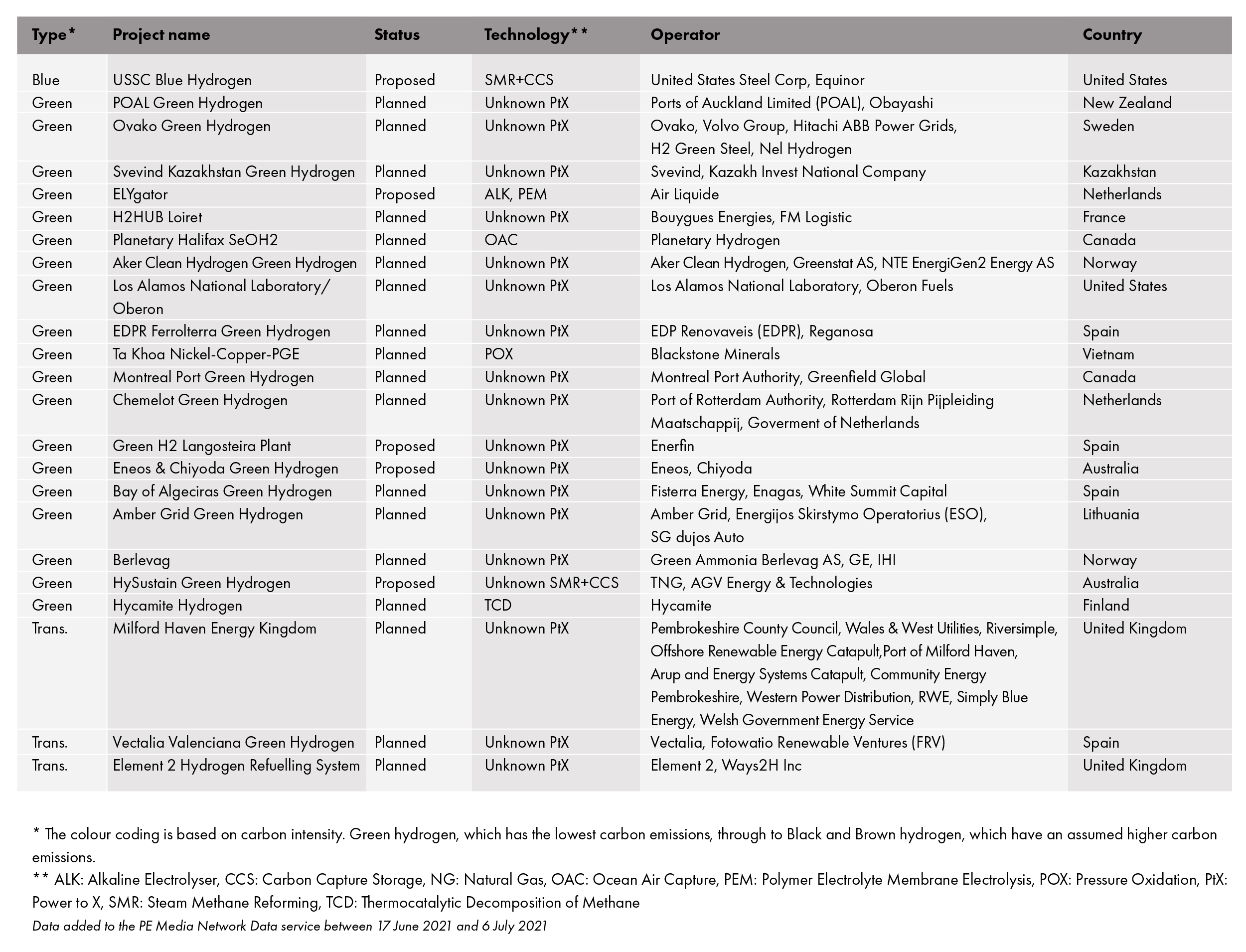
Comprehensive details can be found on the Hydrogen Data Service.

Related Articles
Connect with H2Tech
