
Articles
Vopak targets leading role in global hydrogen trade
Dutch commodity storage company Vopak is setting itself up to play a crucial role in the growing worldwide trade in hydrogen, which it sees as one of the vital energy products of the future, its recently appointed global director of new energies tells Hydrogen Economist.
The Rotterdam-based firm, which has traditionally focused on storing oil and chemicals, is placing bets for future business growth on storing new types of energy carriers, including hydrogen.
“We believe that hydrogen will ultimately develop into a globally traded energy commodity in which Vopak's infrastructure can play a crucial role to facilitate and balance global supply and demand,” says Marcel van de Kar, who started at Vopak more than 25 years ago and was appointed into the newly created role of global director of new energies last month.
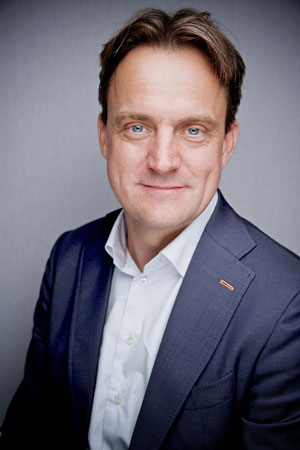
“It is exciting to be leading Vopak’s efforts to enable new supply chains and facilitate the vital products of the future,” van de Kar says. “It is an area in which cooperation between very different parties around the world is the key to success.”
Vopak’s strategy is to build on its presence in the world’s major ports in order to eventually offer hydrogen-linked storage options to customers across the globe. The company is already active in storing ammonia at five terminals in Asia, the Middle East and North America.
“Location presence is always crucial,” according to van de Kar. “An independent operator such as Vopak supports investments in open-access infrastructure for multiple users, which makes it more cost efficient for the industry.”
Target projects
Vopak plans to invest in hydrogen and ammonia infrastructure to import and distribute the commodities at large scale in the world’s main energy and industrial demand centres. To start, Europe presents the most promising area. “Given Europe’s ambitious climate goals, we focus specifically on how to facilitate imports of hydrogen into the Netherlands, Belgium and Germany, with potential supply chains originating in southern Europe, Morocco, the Middle East and South America,” van de Kar says.
Vopak has set aside €300-350mn to invest in growth projects this year, and most of it has been earmarked for spending in the new energies division. The company is involved in more than ten different projects in this space, including one investigating—jointly with partner Hydrogenious—the possibility of bringing hydrogen stored in liquid organic hydrogen carriers (LOHC) from a plant under construction in Germany to Rotterdam.
“We believe that hydrogen will ultimately develop into a globally traded energy commodity” van de Kar, Vopak
Storing and transporting hydrogen will be key to its development into a global traded commodity. Next to LOHC technology, Vopak also sees liquefaction and transforming hydrogen into green ammonia as important ways to enable transportation and storage of the fuel. “Each technology has its own advantages and disadvantages, but the various technologies are key to developing global hydrogen supply chains,” says van de Kar.
Vopak’s involvement in LOHC is the direct result of its €17mn investment in Hydrogenious in 2019, through Vopak Ventures. Two funds, one dedicated to sustainability investments and the other to digitalisation, allow the 400-year-old company to get involved in new technologies at startup level. So far, the funds have invested in nine companies and Vopak’s typical investments vary between €0.5-10mn.
Other investments include HyET Hydrogen, a manufacturer of commercially viable Electrochemical Hydrogen Compressors, and HyEt Solar, which produces extreme lightweight solar modules.
Author: Karolin Schaps
Related Articles
Connect with H2Tech
