
Articles
ITM Power on track for global scale
Last year was a transformative one for ITM Power, a company firmly at the forefront of the emerging UK green hydrogen boom. This year is all about building scale, as it seeks to continue along its impressive growth trajectory.
The firm, which manufactures integrated hydrogen energy solutions to utilise renewable energy that would often otherwise be wasted, passed several milestones last year. And the financial markets are certainly impressed, with its share price rocketing from just over 80p at the start of 2020 to 636p.
During 2020, it entered into a strategic partnership with Italian gas infrastructure company Snam, which bought a €33mn ($40mn) stake in the firm. And this was just part of the £172mn ($230mn) funding it raised from the capital markets last November.
At the start of 2021, ITM reached ‘practical completion’ stage of its new 134,000ft2 facility in Sheffield, in the north of England, after only minor delays due to Covid-19. It is the world’s largest capacity electrolyser factory, with 1GW of manufacturing capacity per year.
“Our cost target is €0.5mn/MW in the mid-2020s, which we are very confident about [hitting] because we are tracking ahead of this cost curve already”
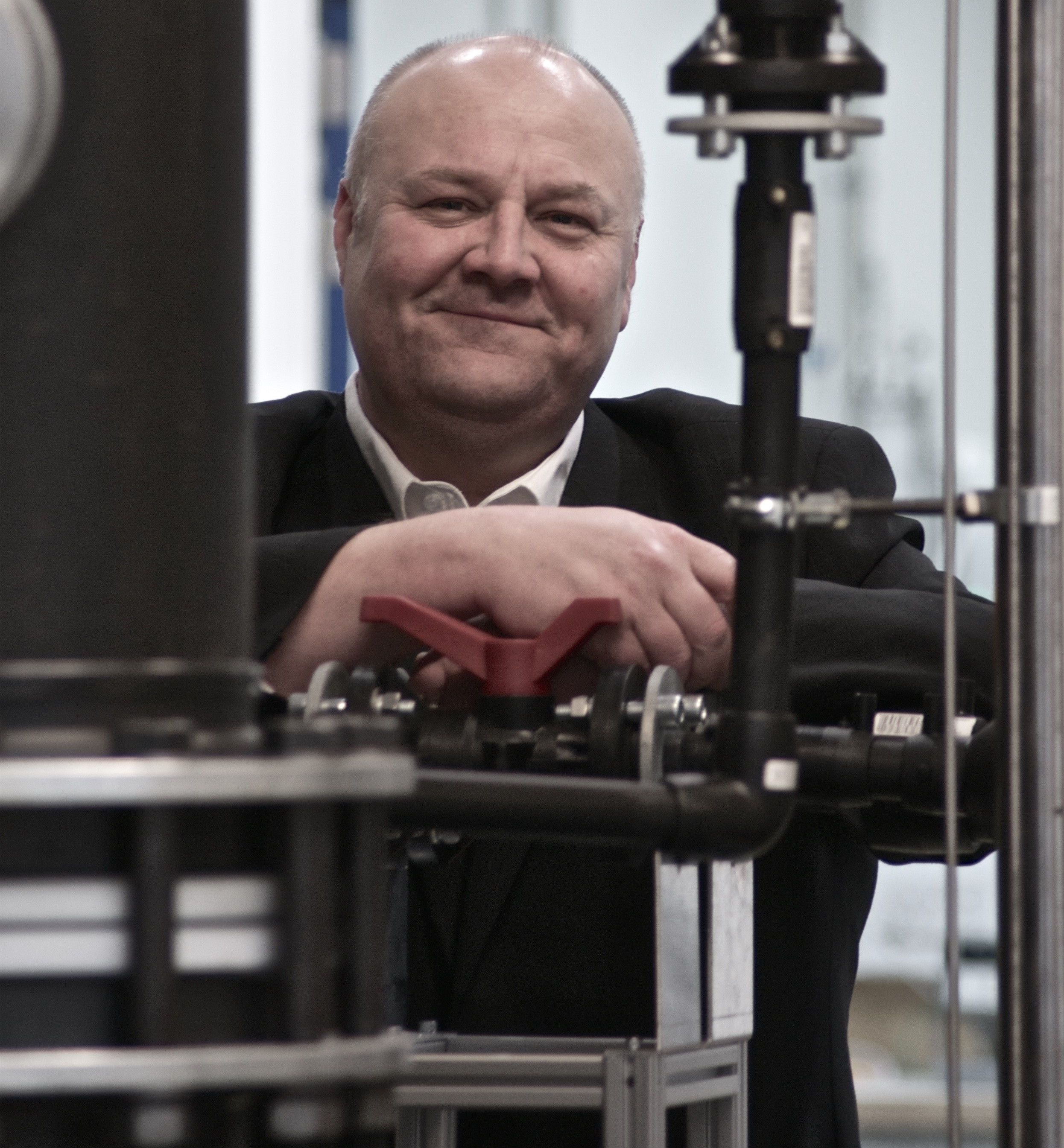
Graham Cooley, CEO of ITM Power, says his company is now setting its sights on increasing scale to capture its share of the global green hydrogen opportunity.
“Scale is now incredibly important in green hydrogen—getting into the hundreds of megawatts and gigawatts is where the market is at,” he tells Hydrogen Economist. “The capital markets are now incredibly well informed about hydrogen and are very enthusiastic about investing in green hydrogen technology.
“We raised enough money in the funding round to build a second 1GW factory should we need one. We will pull the trigger on that when we reach 60pc capacity in the first factory.”
ITM Power is also using the money it raised to hold more inventory, so it can reduce its lead times for customers. “Over the next few years, we will continue to reduce costs, improve performance and our after-sales support capacity, build more factories, and supply more electrolysers worldwide,” he says.
Partnership model
In addition to its relationship with Snam, ITM has formed partnerships with industrial gases and engineering firm Linde, major Shell, offshore wind giant Orsted and Scottish Power Renewables.
In October 2019, ITM announced a 50/50 joint venture with Linde to focus on providing global green gas solutions at industrial scale, cementing a five-year partnership with the world’s biggest speciality gas company. Linde took a £38mn ($51.7mn) stake in ITM at the same time.
ITM is anticipating sealing more partnerships with renewable energy companies globally during 2021. Renewable energy companies as well as oil, gas and infrastructure businesses are all keen to get involved in green hydrogen, adds Cooley.
There are three factors driving this demand, he says: green hydrogen costs are decreasing; energy storage needs are increasing; and industry will need to meet net-zero CO2 emissions targets.
“It is incredibly important that we get to net-zero in the entire gas infrastructure,” says Cooley. “A gas transmission or distribution company needs something that is net-zero to replace natural gas in the gas grid, and the only net-zero energy gas is green hydrogen.”
Green hydrogen is expected to replace grey hydrogen, the vast majority of which is from steam methane reforming without sequestering CO2. Industrial companies use 400TWh of grey hydrogen in Europe alone, says Cooley, in refineries as well as in the production of ammonia, methanol and metals.
Green hydrogen can also be stored for an indefinite period of time and transported to other countries. “If you want to store electricity and use a battery, then you will probably be looking at storage lasting for only about an hour,” says Cooley. “Whereas, if you put the hydrogen into the gas grid, you can store it for days, months or even years.”
Reducing costs
Scaling up and increasing volume can also reduce costs for electrolysis, the process by which green hydrogen is extracted. Cooley says the cost to customers for the full electrolyser system is already coming down “pretty rapidly”. ITM Power is targeting a 40pc cost reduction within five years.
“We are at [for full system price] of less than €0.8mn/MW ($1mn/MW) today, and this is reducing. We get the reduction in cost from scaling the electrolyser, increasing the volume through the factory.
“We are also working with Linde Engineering to reduce the cost in the balance of plant [supporting components and auxiliary systems]. Our target is €0.5mn/MW ($0.6mn/MW) in the mid-2020s, which we are very confident about because we are tracking ahead of this cost curve already.”
The cost of renewable power is the biggest operating cost associated with producing green hydrogen. The other key variable is production volume.
There is a broad agreement from bodies such as research organisation Bloomberg NEF and global CEO-led initiative the Hydrogen Council that, at some point between 2030 and 2050, green hydrogen could be produced for $0.80-1.60/kg—which is equivalent to natural gas at $6-12/mn Btu.
“There is a strong pathway to reach cost competitiveness between 2030 and 2050,” says Cooley. “Certainly by 2030, green hydrogen will be lower cost than grey hydrogen, which is made from natural gas, and soon after it will be at a comparable cost to natural gas in some parts of the world.”
Blue versus green
The debate regarding relative future demand for green and blue hydrogen continues to rumble on. While blue hydrogen can be low-carbon, with the CO2 released during the process of producing grey hydrogen stored to a substantial degree, it is similarly subject to protracted rollout.
“Over the next few years we will continue to reduce costs, improve performance and our aftersales support capacity, build more factories, and supply more electrolysers worldwide”
“The deployment timescales for blue hydrogen are such that when the first major blue hydrogen schemes are constructed, green hydrogen will be at a lower cost,” says Cooley. “Therefore, one has to be concerned about whether blue hydrogen would then become a stranded asset, if liabilities for those CO2 stores sit on the balance sheets of oil and gas majors.”
As green hydrogen production does not result in CO2 emissions, there is no requirement to store waste gas. Unlike green hydrogen, blue hydrogen is not net-zero, says Cooley, because with blue carbon capture is not complete and there are fugitive emissions of methane from the natural gas infrastructure.
“It is one thing to store the CO2, but we have to have a methane infrastructure that does not leak because methane is a considerably more potent greenhouse gas than CO2. So, you would not only need to store the CO2, but also need to eliminate any leakage from the gas infrastructure,” he explains.
Export potential
One way of exporting renewable power is to use it to create green hydrogen, which can be compress or liquefied, and ship it in the same ways as compressed gas or LNG, he says.
“There is now an international market developing for importing and exporting renewable power in the form of renewable molecules. When the world moves to net-zero, some places will get there faster than others because they have more renewable energy resources, and there will be more of an export market for energy. That is absolutely a key application for hydrogen.”
He also believes that energy will be created in different ways in different countries when they move to net-zero, because “each country has different renewable energy resources”.
With Europe’s green hydrogen consumption to grow eightfold to 2,500TWh by 2050, according to consultancy Aurora Energy Research, ITM Power is well placed to take advantage of this rapidly growing sector.
Author: Stephanie Baxter
Related Articles
Connect with H2Tech
